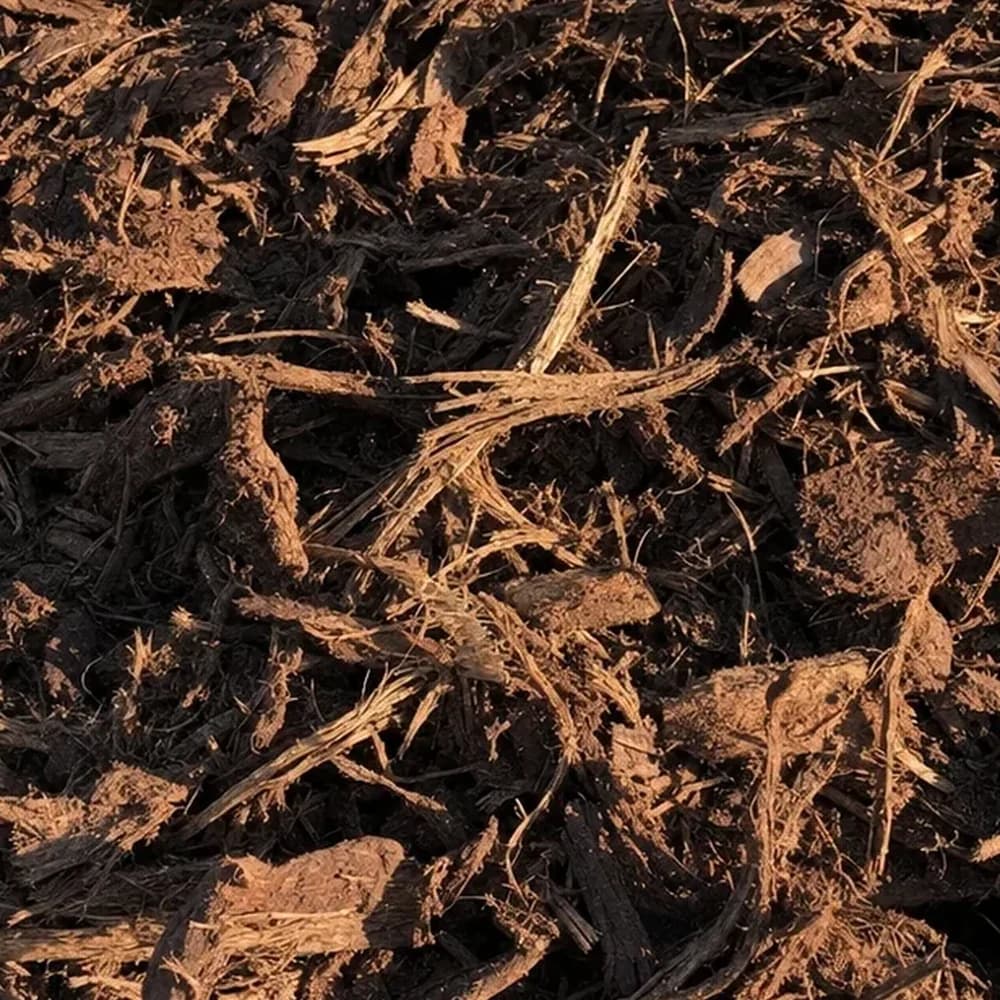
Mulch calculator for Idaho
Plan every yard bed in bags or yards, with depth advice to support healthy plants.
Enter your project dimensions
Each cubic yard holds 27 cubic feet, equal to exactly 13.5 garden-center bags sized at 2 cubic feet. That conversion is the main purpose of this page. Add your bed measurements and chosen depth below to see the bulk-order yardage alongside the bag equivalent for comparison with a store trip. Shredded hardwood is light at around 600 lb per yard, so mulch is sold by volume, not weight, and bulk delivery is based on volume.
Find mulch quantities for your beds
- Add together the square footage of beds measured in feet. For a round bed, measure its diameter and use circle mode to find the area.
- For existing mulch, select 2 inches after loosening the layer. Use 3 inches on new or uncovered beds, since depths beyond 4 inches can limit air at the roots.
- The result shows bulk quantity in cubic yards and a store-bag comparison of 13.5 bags for each yard.
Bags (2 cu ft) = cubic yards × 13.5
Mulch coverage chart
| Depth | 1 cubic yard covers | 10 bags (2 cu ft) cover |
|---|---|---|
| 1 inch | 324 sq ft | 240 sq ft |
| 2 inches | 162 sq ft | 120 sq ft |
| 3 inches | 108 sq ft | 80 sq ft |
| 4 inches | 81 sq ft | 60 sq ft |
Common order sizes
| Project | Typical size | Depth | Cubic yards | ≈ Bags |
|---|---|---|---|---|
| Foundation beds along the house | 40 x 3 ft | 3" | 1.1 yd³ | 15 bags |
| Four tree rings | 4 ft across each | 3" | 0.5 yd³ | 6 bags |
| All beds, average yard | ≈ 500 sq ft | 3" | 4.6 yd³ | 63 bags |
| Annual refresh of the same beds | ≈ 500 sq ft | 1.5" | 2.3 yd³ | 31 bags |
| Playground surface | 15 x 15 ft | 6" | 4.2 yd³ | 56 bags |
Bulk and bags: comparing costs
Ten bags marks the usual crossover. Bags are convenient below that amount. Above it, bulk is less expensive in most places, and free delivery takes truck rental out of the comparison. After hauling 15 bags home, people often find the math changes in the parking lot. A delivered yard and a tarp for remaining material can finish the job.
Depth guidance for plant health
- After raking the prior layer loose, add 2 inches over last year's mulch.
- Use 3 inches over exposed soil to limit weed germination and help the ground retain moisture through July.
- Leave a clear 3-6 inches between mulch and the tree trunk. Bark can rot and rodents can find cover when mulch touches it. Make a flat donut shape instead of a volcano.
- Do not exceed 4 inches in any location. A deep, wet layer can limit the air available to roots.
- For playground surfacing, apply at least 6 inches and choose chips certified for playground use instead of landscape shred.
Selecting mulch types
This calculator uses shredded hardwood as its default. It interlocks, helping it remain in place on mild slopes. Chips and nuggets can last a season or two beyond it, though heavy rain may float or spread them. Dyed mulch maintains its color but breaks down more slowly. Each type uses the same volume calculation, so type does not affect order quantity, only appearance and how often it needs refreshing.
Preparing for delivery
Three yards forms a pile roughly comparable to a small car. Set aside a parking spot of driveway space and place a tarp before unloading, because fresh concrete can be stained by shredded mulch. Get it spread within a week or two. If a large pile remains for a month, heat can build in the middle and cause it to sour. Allow 30 to 45 minutes of wheelbarrow time for each yard, then reserve the last half-yard for missed beds behind the garage.
Mulch calculation answers
What bag count equals a cubic yard of mulch?
What is the cubic-foot volume of a yard of mulch?
How much mulch is required?
What area can one yard of mulch cover?
What does one yard of mulch weigh?
What is the cost of a yard of mulch?
Will mulch attract termites?
Can fresh mulch go over an old layer?
More calculators
Avoid filling a 27-bag cart.
Shredded hardwood mulch is sold by the yard and tipped in your driveway with free delivery.