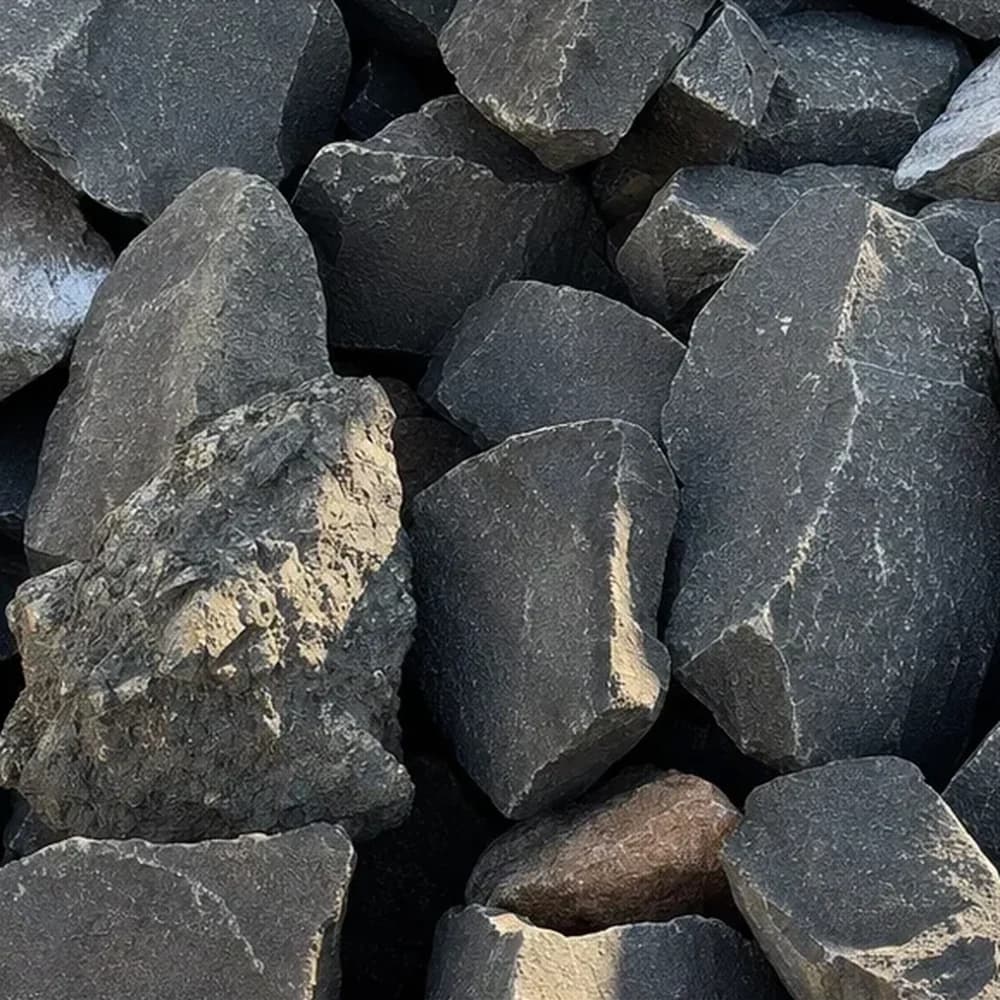
Rip rap calculator for Idaho
Calculate rock tonnage for banks and slopes using the installed layer depth, not a shallow landscape-rock depth.
Enter your project dimensions
A ton of riprap will cover about 17 square feet. That figure is right. With armor stone installed at 12 inches or deeper, each ton covers about a tenth of the area landscape rock would cover. The pile may look small beside the bank it is meant to cover. This calculator bases the estimate on layer thickness and 3,100 lb per cubic yard for stone commonly ranging from 4 to 12 inches and larger.
How to measure an armored bank
- Take the bank measurement along its angled face, then multiply that distance by the channel or shoreline length.
- Use a layer 1.5 to 2 stone sizes deep, with 12 inches as the practical minimum for erosion protection.
- Find cubic yards by dividing cubic feet by 27, then estimate tons by multiplying by 1.55.
Per-ton coverage
| Layer thickness | 1 ton covers | Tons per 100 sq ft |
|---|---|---|
| 12 inches | ≈ 17 sq ft | 5.7 |
| 18 inches | ≈ 12 sq ft | 8.6 |
| 24 inches | ≈ 9 sq ft | 11.5 |
Installation details for working stone
- Put the underlayment in first: use non-woven geotextile below the rock, or place 3-4 inches of #4 stone. Stone set straight on soil may look fine at first, then settle when water removes support beneath the bank.
- Bury the toe at the bottom. Set the first row below the waterline or the expected scour depth, since failures work their way upward from there.
- Shape the bank to 2:1 or flatter before installing stone. If the face is steeper, it calls for engineering rather than extra rock.
- Machine-set or hand-fit the exposed upper stones so they lock together, rather than leaving each one where it lands.
- Extend an outlet apron 4-6 pipe diameters beyond the culvert downstream, where the discharge can scour the soil.
Example: 50 feet of pond bank
For a 6-foot bank face running 50 feet along the shore, the slope area is 300 square feet. With an 18-inch layer: 300 x 1.5 = 450 cubic feet = 16.7 cubic yards, or about 26 tons of riprap and 27 with a small allowance. Include a roll of geotextile, or use about 4 tons of #4 stone as rock bedding. Before ordering, walk the truck path. The final 20 feet near a pond can trap a loaded truck, and moving stone a second time costs twice.
Once the first major storm passes
Once the flow recedes, give the bank a quick look. Check the toe for rock that has moved, bare soil in the gaps, exposed fabric, and erosion around the outfall apron. Put loose pieces back where they belong and use saved stone to cover sparse areas. Spending Ten minutes on this a couple of times a year is the full upkeep routine for riprap, letting the rock protect the bank with little attention.
Stone sizes at a glance
Choose rock size based on water force. Riprap from four to eight inches works for pond banks, downspout outfalls, and slow-moving streams. Stone from eight to twelve inches fits lake shorelines with boat wake and swifter channels. Highway and spillway projects have their own specified classes and depths, so use the project drawing instead of this guide. If you are deciding between sizes, select the larger stone and use a thicker layer. More weight provides added margin.
Riprap sizing, tonnage and placement
How can I estimate the rip rap needed?
What coverage comes from 1 ton of riprap?
What is the size of 1 ton of rip rap?
What is the cost for 1 ton of rip rap?
What layer depth does rip rap need?
Is hand placement possible for rip rap?
More calculators
Plan your bank protection.
Get RipRap by the ton with free delivery, along with #4 bedding stone for beneath the riprap.