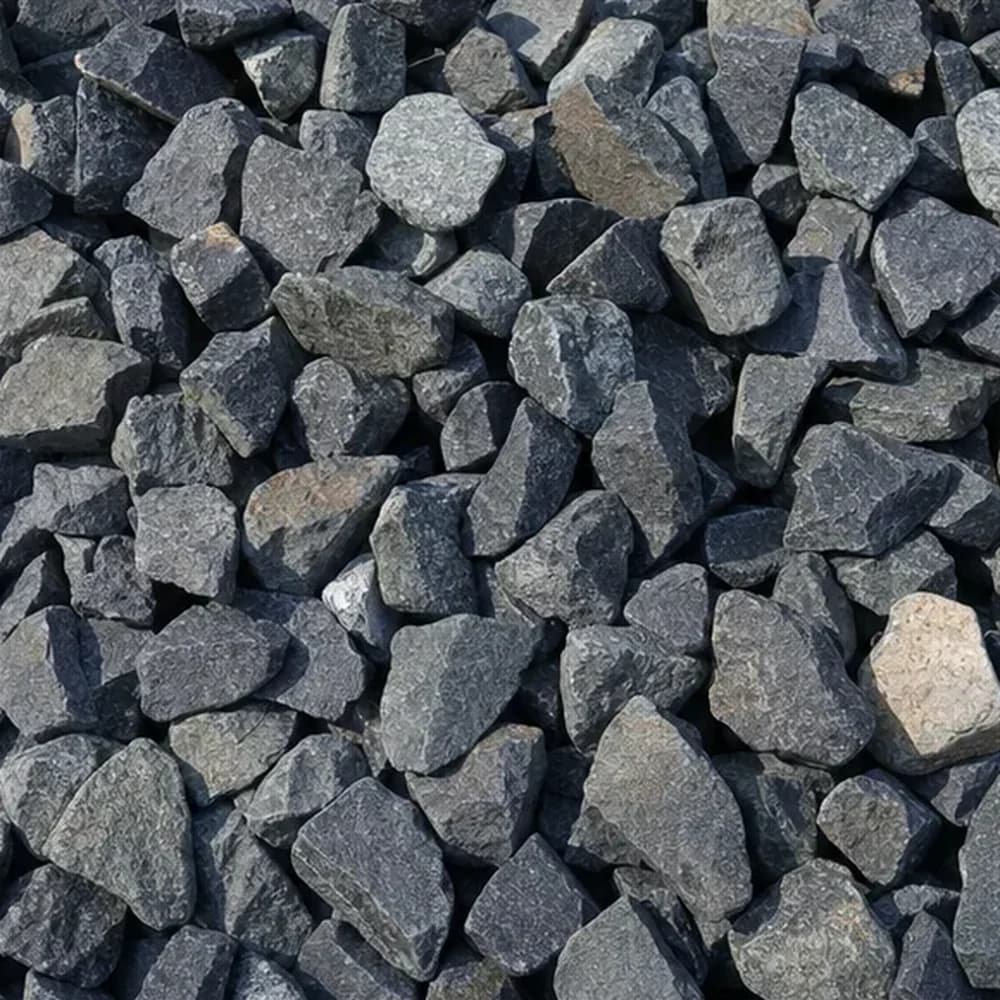
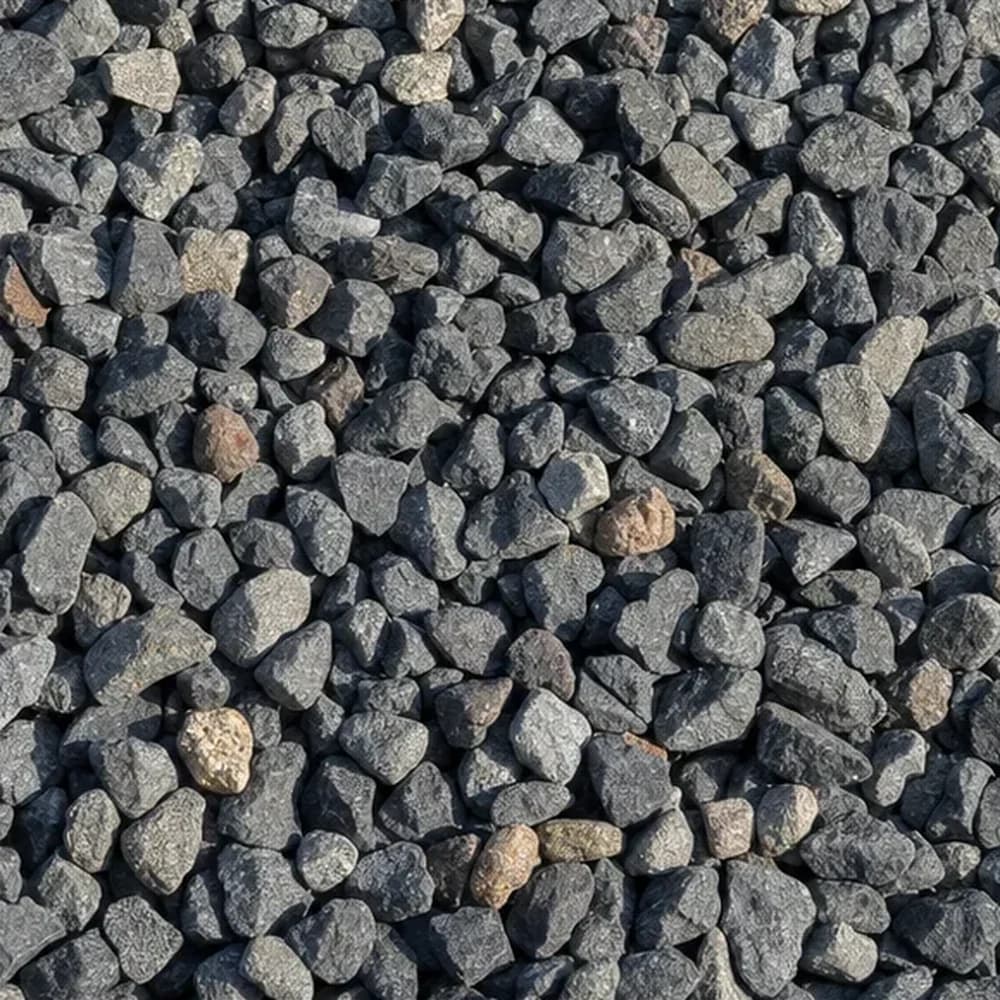
Gravel calculator for Idaho
Calculate the cubic yards and tons for a gravel or landscape rock project, identify the right product, and have it delivered free.
Enter your project dimensions
At a depth of 2 inches, one ton of crushed gravel will cover about 116 square feet. This calculator uses that estimate for planning material. Enter your dimensions and depth, select the gravel, and it returns cubic yards, tons, and a delivered price. You can also use it for landscape rock because crushed gravel, #57 stone, and similar products weigh close to 2,800 lb per cubic yard.
Calculate the gravel you need
- Take measurements in feet. For a rectangle, enter length and width; for a circle, use its diameter. Divide an L-shaped driveway into two rectangles, then let multiple-areas mode total them.
- Enter depth in inches. Use 2 to 3 inches for paths and top-ups. Build a new driveway with 4 to 6 inches in two layers rather than one deep placement.
- Start with area multiplied by depth in feet to get cubic feet. Divide that result by 27 to get cubic yards, then multiply by 1.4 to get tons.
Tons = cubic yards × 1.4 (crushed gravel at ~2,800 lb per cubic yard)
Useful weight and coverage figures
Dry crushed gravel weighs roughly 2,800 lb in a cubic yard. That equals 1.4 tons, while one ton comes to about 0.71 cubic yards. Adding depth reduces the area each load will cover:
| Depth | 1 cubic yard covers | 1 ton covers |
|---|---|---|
| 2 inches | 162 sq ft | ≈ 116 sq ft |
| 3 inches | 108 sq ft | ≈ 77 sq ft |
| 4 inches | 81 sq ft | ≈ 58 sq ft |
| 6 inches | 54 sq ft | ≈ 39 sq ft |
| Material | Weight per cubic yard | Tons per yard |
|---|---|---|
| Driveway / walkway gravel | ≈ 2,800 lb | 1.40 |
| Pea gravel (3/8") | ≈ 2,800 lb | 1.40 |
| Crushed stone (#57, 3/4") | ≈ 2,800 lb | 1.40 |
| Crusher run / road base | ≈ 3,000 lb | 1.50 |
| River rock (1–3") | ≈ 2,700 lb | 1.35 |
Project depth guide
- Garden paths and walkways: use 2 to 3 inches of walkway gravel on compacted ground or fabric.
- Existing driveway refresh: Spread 2 inches of fresh surface gravel.
- New driveways: begin with 3 to 4 inches of compacted crusher run, then add 2 to 3 inches of driveway gravel or #57. The lower layer handles the load, and the upper layer drains water while providing the finished surface.
- Patios and seating areas: install 2-3 inches within firm edging.
- French drains and soggy spots: install 12 inches or more of clean stone. Use the Stone Calculator for these jobs because drainage needs washed rock without fines.
Example: a 50 x 10 ft driveway
For 500 square feet at 4 inches overall, calculate 500 x 0.333 = 167 cubic feet. Divide that by 27 for 6.2 cubic yards, or 8.7 tons. Allow 5% for compaction, so plan on about 9 tons. Use roughly a 60/40 split of crusher run base and surface gravel. Keeping the layers separate matters, particularly where Palouse loess or Panhandle clay can retain water. Do not place one 2-inch layer directly on dirt.
Common project estimates
Use these rough starting points before measuring, based on 1.4 tons per cubic yard:
| Project | Typical size | Depth | Volume | Weight |
|---|---|---|---|---|
| Single-car driveway pad | 20 x 10 ft | 4" | 2.5 yd³ | 3.5 tons |
| Two-car driveway | 24 x 20 ft | 4" | 5.9 yd³ | 8.3 tons |
| Country driveway | 50 x 12 ft | 6" | 11.1 yd³ | 15.6 tons |
| Garden path | 20 x 3 ft | 3" | 0.6 yd³ | 0.8 tons |
| Patio seating area | 12 x 12 ft | 3" | 1.3 yd³ | 1.9 tons |
| Shed base | 10 x 12 ft | 4" | 1.5 yd³ | 2.1 tons |
Four reasons orders come up short
- Leaving out the base on a new driveway. Gravel spread directly over soil can form ruts within a season, so install base first and the surface layer after.
- Looking at area instead of depth when comparing quotes. The same 20 x 10 pad can receive different bids because of depth, so compare equivalent tons.
- Using under 2 inches. A one inch layer can vanish into mud by spring.
- Leaving the surface flat. Water collects there, while a 2% slope directs it away and helps fines stay put.
Match gravel to the surface
Crushed angular gravel compacts and locks under vehicle weight, making it suitable where tires travel. Rounded material such as pea gravel and river rock shifts under load, so use it for paths and planting beds. For a durable driveway, combine a compacting base like crusher run or road base with a draining top layer like driveway gravel or #57. If you need help choosing between products or identifying existing gravel, send a photo through our contact form.
How yards, tons, and truckloads work
One pile is measured three ways. Cubic yards measure volume, while a ton measures 2,000 lb of weight and equals about 0.71 yards of gravel. Truckload means the amount a truck can carry: 8 to 10 yards for a single-axle dump truck, or 12 to 16 yards (17 to 22 tons) for a tandem. Put every quote in tons before comparing prices. Compare delivered prices only. Hauling often makes up half the aggregate cost; free delivery on every ARS order means the per-ton price shown is what arrives at your driveway.
Measure irregular driveways
Curved lanes and turnarounds can be harder to estimate. For a curve, measure down the drive center and use the average width. A round turnaround can be treated as a circle, using its widest point for the diameter. On slopes, make the base thicker at the downhill end because water and gravel move that direction. If the layout is difficult to measure as one shape, separate it into rectangles and total them in multiple-areas mode.
Prepare for delivery
- Choose the drop location before the truck gets there. Use firm ground and avoid low wires and septic field crossings.
- Set the load down near the job. One yard of gravel means 9 to 14 wheelbarrow trips, and another 10 feet becomes a lot of travel across 6 yards.
- If the load will be tipped on pavement you want to protect, put down a tarp. Cleanup can go from an afternoon to ten minutes.
- Pack the base course before placing the surface course. You can rent a plate compactor, or use truck tires when necessary.
Gravel answers by the numbers
What area does 1 ton of gravel cover?
How can I calculate gravel quantity?
What gravel quantity covers a 10x10 area?
How many gravel yards equal a ton?
What does a gravel truckload hold?
What is the price of a yard of gravel?
Do I need extra material for compaction?
Can gravel be installed over grass?
More calculators
That tonnage includes free delivery.
Driveway gravel, #57, and crusher run are sold by the ton with delivery across Idaho.